How to Reset Your Circadian Rhythm, Step by Step
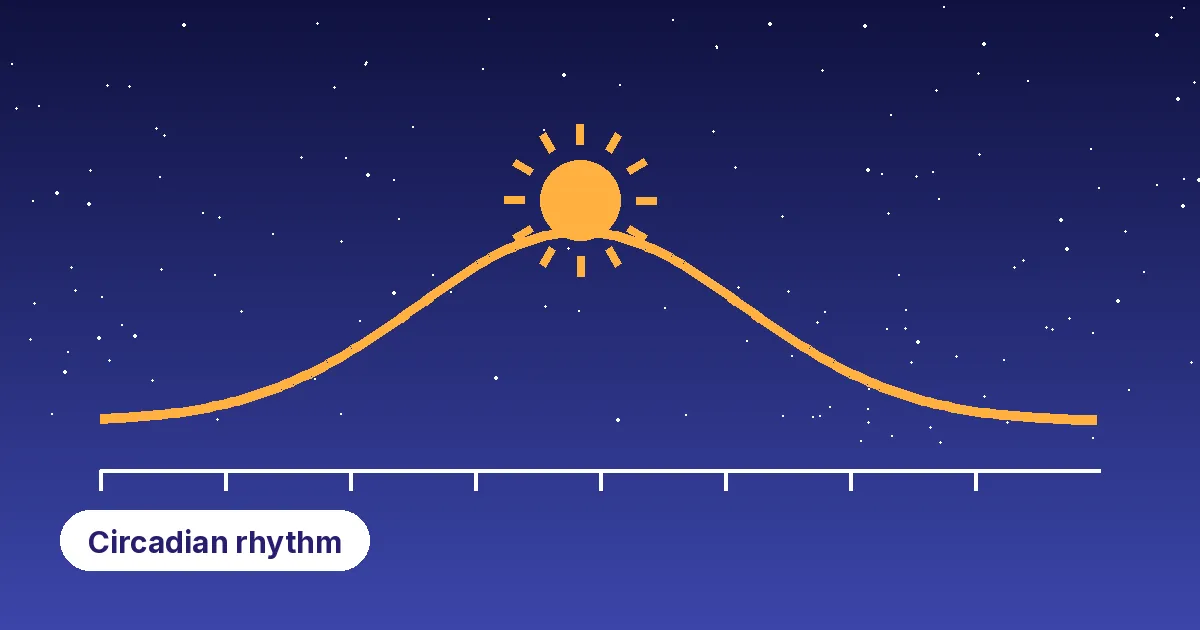
Your circadian rhythm is a roughly 24-hour internal clock, and you reset it mostly with light and a fixed wake time. It sets when you feel sleepy, when you feel alert and even when you feel hungry. When it is aligned with your life, you fall asleep easily and wake without a fight. When it is out of step, because of travel, a shift change or weeks of late nights, you feel like you are living in the wrong time zone while standing in your own kitchen.
Here is a plain-language explanation of the clock and a step-by-step reset that works for most healthy adults.
How the clock works, in plain language
Your body keeps time with a master clock in the brain that follows a cycle a little different from exactly 24 hours. Daily cues keep it synced to the actual day. The strongest cue is light. Others include the timing of meals, exercise, social contact and temperature.
The practical consequence: morning light moves your clock earlier, and light late in the evening moves it later. That is why a person who spends the day in dim rooms and the evening in front of bright screens drifts later, and why a morning walk can pull a drifting clock back.
Five signs your clock is out of step
- You are wide awake at 2 AM and wrecked at 8 AM.
- You feel better on weekends than on weekdays, even with the same sleep length.
- You are hungry at odd times.
- Your energy peaks late in the evening, and your mornings are a fog.
- You feel like you have jet lag but have not travelled.
If any of these ring true, a reset is a sensible experiment. If you suspect a medical sleep disorder, speak to a doctor instead.
The reset in six steps
Step 1: Choose an anchor wake time
Pick a wake time you can hold seven days a week, within 30 minutes. If your current wake time is much later, start from it and move earlier in 15-minute steps. The anchor is the single most important choice, because every other cue is measured against it.
Step 2: Get bright light early
Within 30 minutes of waking, spend 10 to 30 minutes outdoors, or by the brightest window you have. Even an overcast sky outdoors is far brighter than a typical room. Do this daily. If you wake before sunrise, use bright indoor light and step out as soon as the sun is up.
Step 3: Dim the evening
In the last two hours before bed, lower the lights, use warm lamps and avoid scrolling in bed. This is not a rule against screens, but a nudge to keep the room and the content calm. A dark, cool bedroom helps.
Step 4: Time your meals and caffeine
Eat at regular times. Breakfast within an hour or two of waking supports a morning timing signal, and finishing dinner a few hours before bed avoids a heavy late meal. Keep caffeine to the first half of the day: a cutoff around eight hours before bed is a good test.
Step 5: Move your body in the daylight
Exercise outside or in the day acts as another timing cue and often helps sleep. Avoid very intense workouts in the last hour or two before bed if you notice they keep you wired.
Step 6: Shift in small steps
Move your wake time and bedtime 15 to 30 minutes at a time, every two to four days, until you reach the target. This sounds slow, but the clock moves roughly an hour per day at most, so small steps are comfortable.
A worked example: a late clock
Maya wants to fall asleep by 11 PM and wake at 7 AM, but her clock sits at 2 AM to 10 AM.
| Days | Wake | Bed | Notes |
|---|---|---|---|
| 1 to 3 | 9:30 | 1:30 | Outdoors 15 min after waking |
| 4 to 6 | 9:00 | 1:00 | Caffeine cutoff at 2 PM |
| 7 to 9 | 8:30 | 12:30 | Dim lights after 10 PM |
| 10 to 12 | 8:00 | 12:00 | Phone charges outside bedroom |
| 13 to 15 | 7:30 | 11:30 | Hold weekends within 45 minutes |
| 16 to 18 | 7:00 | 11:00 | Anchor reached |
At two and a half weeks, Maya is at her target. If you are in a rush, you can compress the table. A step of 45 to 60 minutes per day suits some travelers, though it feels rougher.
Jet lag and shift work
Jet lag. Move your wake time toward the new time zone a few days before you leave if you can, then use local morning light on arrival. Avoid heavy late meals, and keep naps short and early in the local day.
Shift work. Keep the same wind-down and darkness routine before sleep, whatever the clock says. Use bright light during your working hours and blackout curtains and eye masks in your sleep window. Consistency inside each pattern matters more than a perfect textbook schedule. If shifts are making you unwell, speak to a doctor.
What not to do
- Do not sleep until noon on days off. It moves the clock later and undoes weekdays.
- Do not rely on bright screens late. They can shift the clock later.
- Do not take a long nap late in the day. A nap after 3 PM can push sleepiness later.
- Do not expect overnight change. Even a good plan takes a week or two to feel natural.
Where energy fits
When your clock is aligned, your energy follows a predictable shape: a rise in the morning, a high point in the late morning, a dip in the early afternoon and a second lift in the early evening. The dip is part of the rhythm, not a flaw. Our afternoon slump guide explains how to plan around it. If your timing is off, the whole curve shifts and you may feel your best at midnight and your worst at 9 AM.
Using a personalized plan
You can run the reset with the table above. If you want your own numbers, Somnova asks a short set of questions about your wake time, evenings, sleep length and how you feel through the day, then returns a personalized plan: a target bedtime and wake time, a sleep debt estimate and a daily energy rhythm to place your work and rest. The entry plan, Somnova Sleep & Energy Plan, is $6.99.
It does not diagnose or treat any condition. For persistent sleep problems, a doctor is the right next step.
Checklist for the reset
- Choose an anchor wake time and hold it daily.
- Outdoor light within 30 minutes of waking.
- Dim the last two hours before bed.
- Regular meals and an early caffeine cutoff.
- Move in 15 to 30 minute steps.
- Limit naps to 20 minutes before mid-afternoon.
- Check your progress weekly with your sleep schedule.
The clock is not mysterious. Give it a steady wake time, a bright morning and a dim evening, and it will follow within a week or two. Be patient with the first few days, because the payoff is a clock that supports your life instead of working against it.